
Future-ready design doesn’t have to announce itself
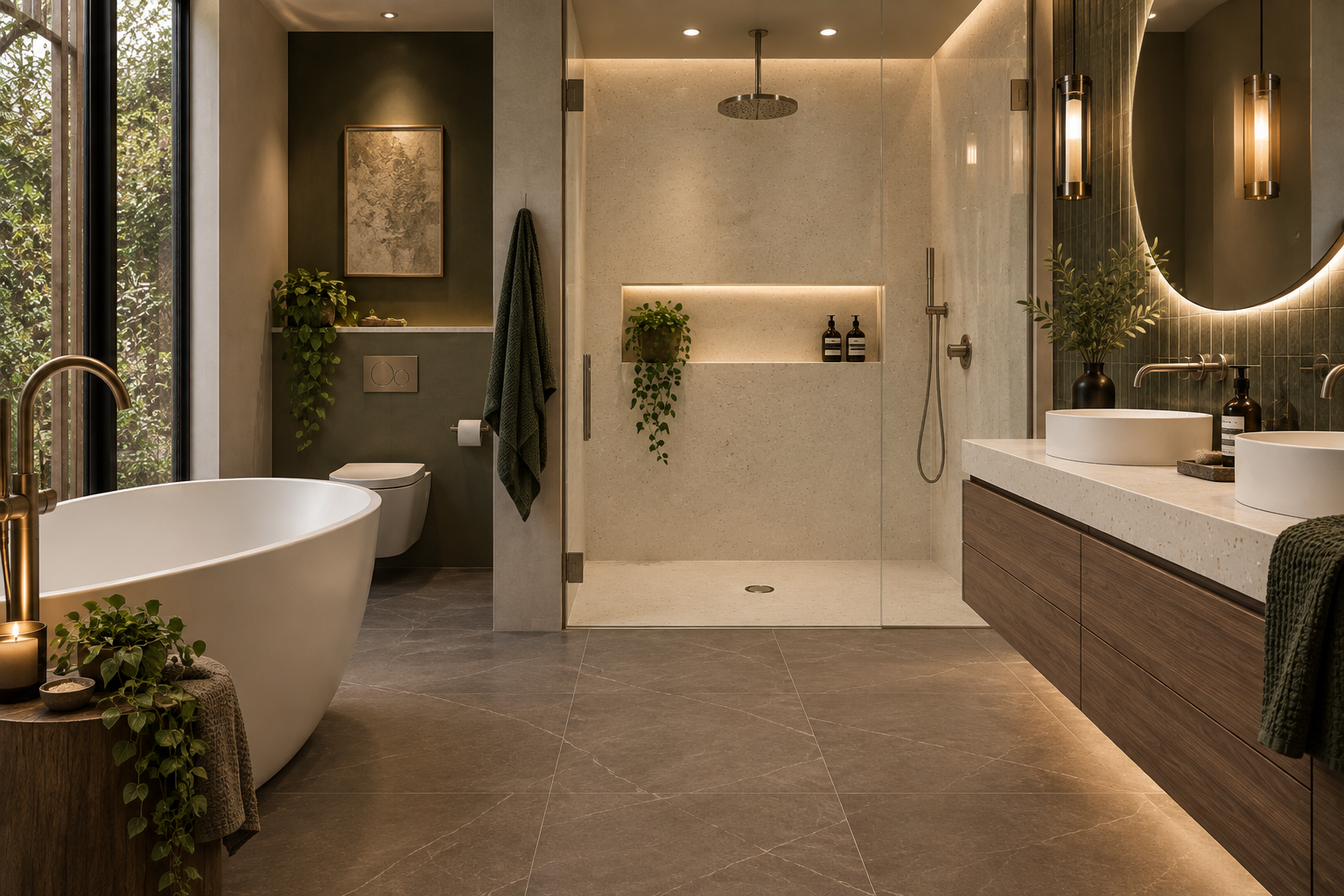
A contemporary architectural bathroom featuring a Formed solid surface shower base in Polar Mist. The level-entry shower design is complemented by matching solid surface wall panels and an integrated shower niche, alongside warm timber cabinetry, natural stone tones and refined bathroom fixtures. The seamless design demonstrates how Formed solid surface solutions can be incorporated into sophisticated residential bathroom interiors.
Why adaptability is becoming an increasingly important consideration in contemporary bathroom specification
The bathroom specified today may need to perform very differently tomorrow.
As residential, multi-residential, accommodation and commercial environments continue to evolve, there is an increasing focus on designing spaces that can respond to changing needs over their lifetime.
In wet areas, this does not necessarily mean designing spaces that appear overtly accessible or introducing features before they are required. Instead, it means considering how decisions made during the specification stage can create greater flexibility for the future.
Level transitions, thoughtful circulation, custom dimensions, considered drainage locations and fewer unnecessary physical barriers can all contribute to a bathroom that remains functional for a wider range of users.
The result can still be refined, minimal and architecturally resolved.
Moving beyond accessible versus non-accessible design
Accessibility has traditionally been approached as a distinct design category, often introduced when required by a particular occupant, project brief or compliance requirement.
Adaptable design presents a broader opportunity.
Rather than asking only whether a bathroom needs to be accessible today, architects, designers, developers and builders can consider how easily that environment could respond to different users and requirements in the future.
A household may change. Occupants may age. Mobility requirements may evolve. A property's intended use may shift.
Designing with those possibilities in mind does not require compromising the original architectural vision.
In fact, many of the characteristics associated with adaptable wet areas are also characteristics increasingly sought in contemporary bathroom design: uninterrupted surfaces, reduced visual clutter, level transitions and components designed specifically for the space.
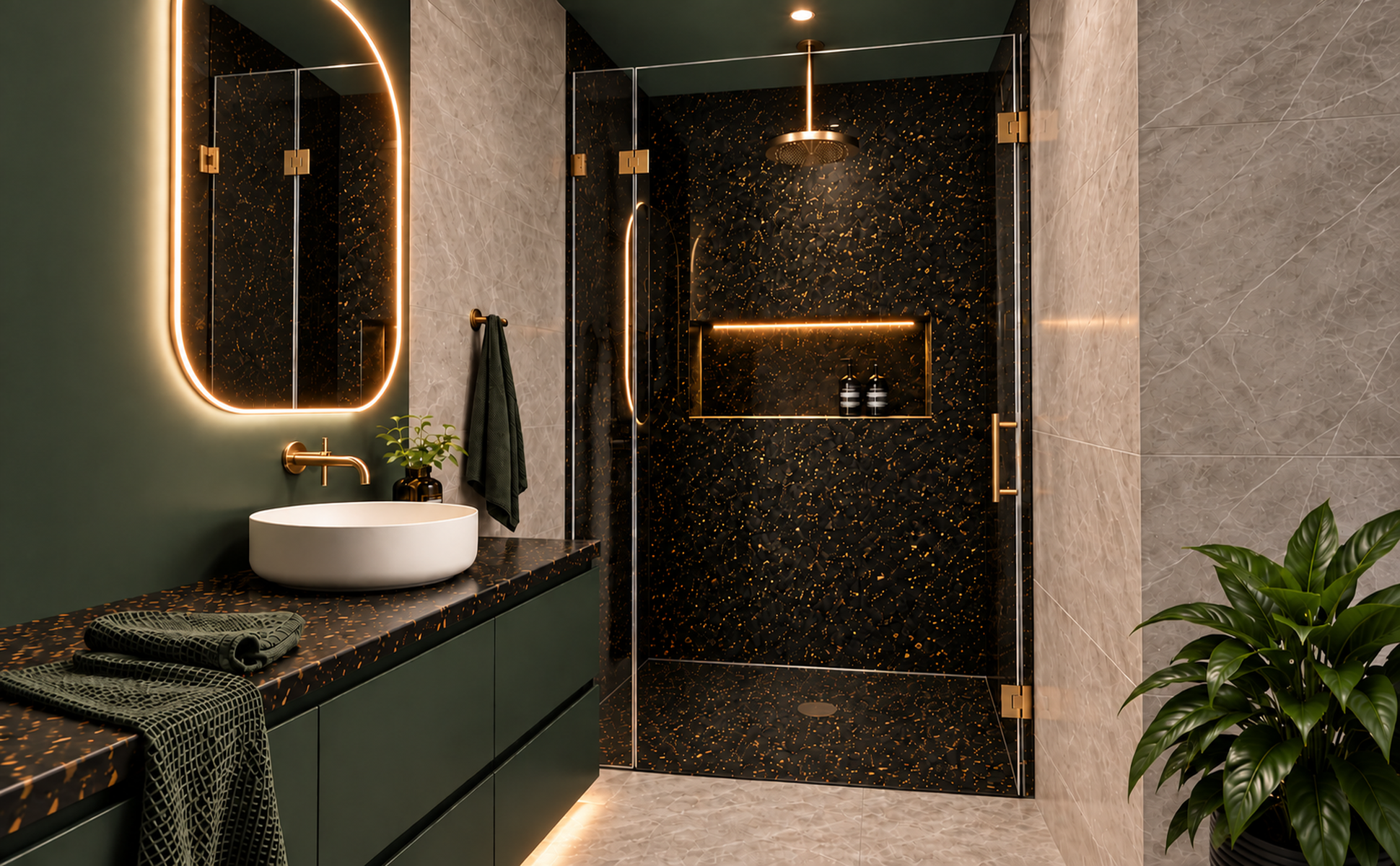
A contemporary luxury bathroom showcasing Formed solid surface in Solar Eclipse across the shower base, wall panels, integrated niche and vanity top. The dramatic black surface with warm gold detailing is paired with deep green cabinetry, brushed metallic fixtures and soft architectural lighting. The fully enclosed shower features a flush solid surface base and integrated waste, demonstrating the versatility of solid surface across coordinated wet-area applications.
The shower base is part of the architecture
The shower base is often considered relatively late in the bathroom specification process, yet its dimensions, drainage position, surrounding floor levels and relationship with screens and walls can influence much of the finished wet area.
Standardised products inevitably require a project to work within predetermined dimensions.
Custom manufacture changes that relationship.
Rather than configuring the bathroom around an available shower base size, the shower base can be manufactured around the architecture.
This allows dimensions, outlet positions and lip configurations to respond to the project itself, particularly where set-downs, level transitions or unusual spatial constraints need to be resolved.
For specifiers, that flexibility can become particularly valuable when balancing architectural intent with construction requirements.
Designing out unnecessary barriers
One of the simplest principles of adaptable wet-area design is avoiding unnecessary barriers wherever the project allows.
A level or carefully resolved shower transition can contribute to a cleaner visual result while also making movement through the space easier.
The same principle applies to circulation around fixtures, shower opening dimensions and the positioning of drainage.
These decisions can appear almost invisible once construction is complete.
That is precisely the point.
Future-ready design does not need to look clinical or communicate that a bathroom has been designed around potential accessibility requirements. When adaptability is considered as part of the architecture from the beginning, it can simply look like good design.
Material selection matters too
Adaptability extends beyond dimensions and layout.
Material selection influences hygiene, maintenance, durability and the ability of a surface to continue performing over the life of a project.
Solid surface provides several characteristics particularly relevant to contemporary wet areas. Its non-porous composition supports hygienic environments, while seamless fabrication can minimise visual interruptions and simplify cleaning.
It can also allow shower bases, wall panels, niches, vanity surfaces and other bathroom elements to share a consistent material language.
This creates an opportunity to address practical requirements without introducing elements that feel disconnected from the wider interior.
Specification at the beginning, not adaptation at the end
Perhaps the greatest opportunity lies in when these conversations occur.
Retrofitting a finished bathroom to accommodate changing requirements can involve substantial demolition, waterproofing work and reconstruction.
Considering adaptability during the original specification process provides architects and project teams with considerably more control.
It allows set-downs, drainage, dimensions, circulation and installation requirements to be resolved alongside the rest of the building rather than addressed retrospectively.
For custom wet-area components, early collaboration between the specifier and manufacturer can also help translate architectural plans into fabrication-ready solutions before construction reaches the bathroom.
At Formed, custom solid surface shower bases are developed around individual project requirements, with CAD drawings, set-down information and installation details forming part of the specification process.
With 12 mm and 20 mm profiles available and custom dimensions, outlet positions and lip configurations able to be considered according to the project, the objective is not to dictate the bathroom design.
It is to manufacture around it.
Future-ready can still be beautiful
Adaptability should not require an aesthetic compromise.
The strongest future-ready spaces are often those where the consideration behind them is almost impossible to see.
They remain architectural, refined and cohesive while quietly allowing for different people, different circumstances and different stages of life.
As expectations around longevity and usability continue to influence the built environment, wet-area specification has an opportunity to move beyond designing solely for the requirements of today.
Because sometimes future-ready design does not look different at all.
It simply works better, for longer.
Formed
Redefining spaces. Shaping better bathrooms.
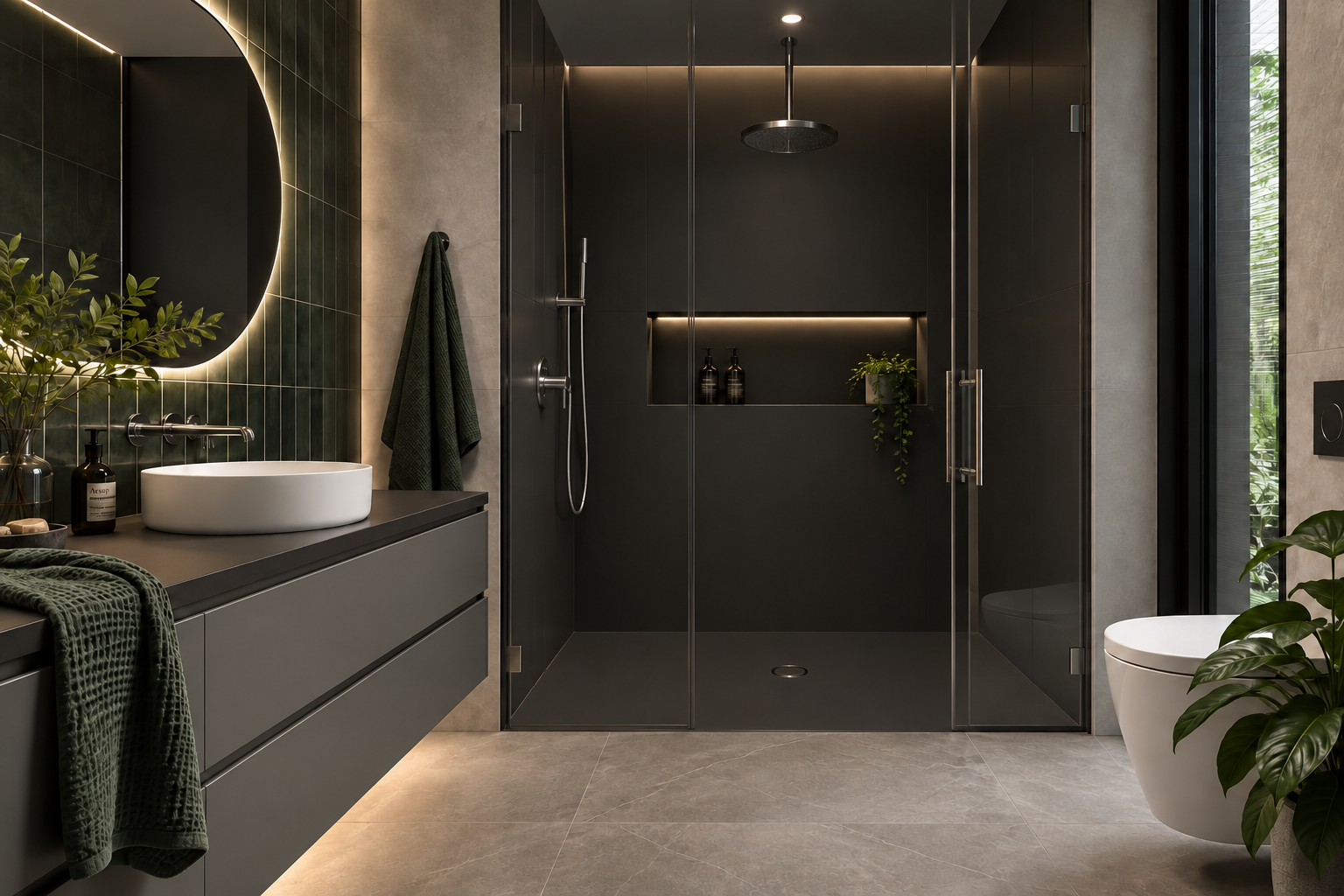
A sophisticated contemporary bathroom showcasing Formed solid surface in Dark Jet Black Meganite across the custom shower base, wall panels and integrated shower niche. The level-entry shower features a flush centre waste, frameless glass enclosure and dark architectural finishes, complemented by warm lighting, green accents and a minimalist floating vanity. The design highlights the seamless integration of solid surface within a refined, specification-focused wet area.